
Blogs

Browse All Resources
Filters
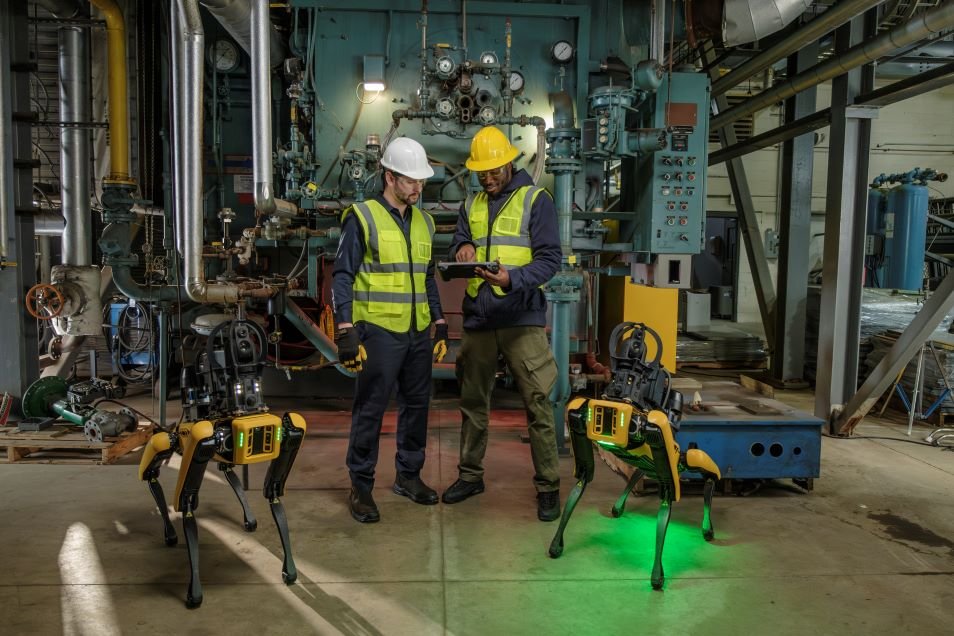
Featured Article: Deep Dive
- Research Paper
Scalable Coordination for Heterogeneous Robot Fleets
- March 15, 2024
- 12 min read
- Dr. Elena Rodriguez
- Multi-Agent Systems
Introduction
Modern industrial environments increasingly deploy heterogeneous robot fleets comprising autonomous mobile robots (AMRs), robotic arms, humanoid systems, and specialized inspection robots. Coordinating these diverse systems presents significant challenges due to varying capabilities, sensor suites, task requirements, and operational constraints.
This paper presents a hierarchical control architecture for scalable coordination of mixed fleets exceeding 100 robots in dynamic industrial settings. Our approach enables efficient task allocation, conflict resolution, and real-time adaptation to environmental changes while maintaining system safety and performance guarantees.
Architecture Overview
1. Strategic Layer
2. Tactical Layer
3. Execution Layer
Key Innovations
Dynamic Capability Matching
- Payload capacity and manipulation skills
- Sensor suites (vision, LIDAR, thermal, etc.)
- Mobility constraints and navigation capabilities
- Energy status and operational endurance
- Communication bandwidth and latency
Conflict Resolution with Temporal Constraints
We introduce a temporal reservation system for shared resources (corridors, charging stations, workcells) that prevents deadlocks while maximizing resource utilization. Robots reserve spatial-temporal volumes, enabling predictable coordination without excessive communication overhead.
Experimental Results
The system was tested in a simulated warehouse environment with 45 AMRs, 12 robotic arms, and 3 humanoid inspection robots. Key performance metrics include:
- Task completion rate: 98.7% (vs. 84.2% for baseline)
- Average wait time: Reduced by 67%
- System throughput: Increased by 42%
- Communication overhead: Reduced by 58%
- Scalability: Linear performance degradation up to 150 robots
Implementation Considerations
Deploying this architecture requires careful consideration of:
- Network infrastructure: Reliable low-latency communication is critical
- Computational resources: Strategic layer can be cloud-based, while tactical layer requires edge computing
- Safety certification: Formal verification of coordination algorithms
- Integration with existing systems: WMS, ERP, and MES interfaces
Conclusion
Our hierarchical coordination architecture enables scalable management of heterogeneous robot fleets in complex industrial environments. By separating concerns across strategic, tactical, and execution layers, the system achieves both high-level optimization and real-time responsiveness.
Future work will focus on extending the architecture to include predictive maintenance integration, energy-aware scheduling, and enhanced human-robot collaboration interfaces.
Dr. Elena Rodriguez
Principal Research Scientist
15+ years in multi-agent systems research. PhD in Robotics from ETH Zurich. Lead researcher on EU Horizon 2020 robotics projects.
References
Related Articles

Start building tomorrow’s solutions today.
Have a question about our robots? Reach out to our team.
- Technical Analysis
Insights & Blog
- Featured Research
Scalable Coordination for Heterogeneous Robot Fleets
- March 15, 2024
- 12 min read
- Dr. Elena Rodriguez